Registered Dietitian/Nutritionists’ thoughts vs words.
Click picture to enlarge
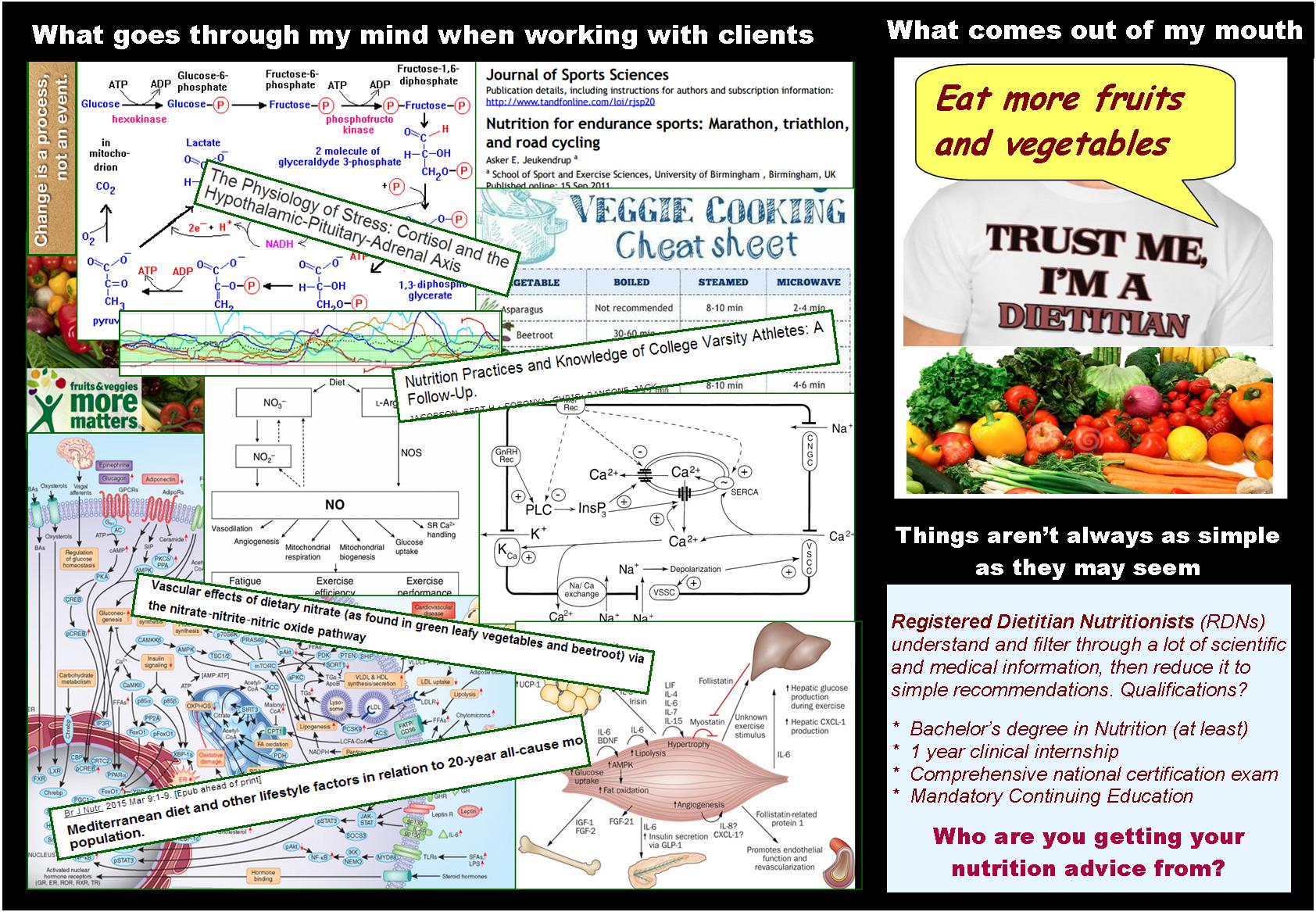
RDN Brain vs. Mouth
Things aren’t always as simple as they may seem
RDNs understand the science behind nutrition recommendations. There are many self-proclaimed “nutritionists” – countless journalists, doctors, and fitness professionals claiming to be nutrition experts and dishing out all kinds of opinions and pseudoscience. Some have certificates from courses and programs they have completed on line (typically completed in a few sessions or a few months… and taught by individuals with no formal nutrition training). Others have degrees in medicine, physics, or journalism. After all, how complicated can it be to understand nutrition?
The answer may surprise you. Nutrition is actually a science – it is a specialized field of biochemistry. Nutrients (vitamins, minerals, phytochemicals, carbohydrates, proteins, fat, etc) are chemical substrates in biochemical reactions within the body. A bachelors degree in Nutrition includes several courses in chemistry and biology/physiology to foster an understanding of how nutrients effect and interact with various physiological functions. Nutrition majors often take many of the same courses as pre-med majors… except that Nutrition majors have several advanced nutrition classes vs. the one semester or less required for medical students. One such course is medical nutrition therapy, in which students learn how various nutrients influence medical conditions and interact with medications, and how nutrition can be used therapeutically to treat or manage diseases, recovery from injuries, etc. This involves learning the science behind the dietary recommendations so as to be able to assess and tailor recommendations for individual needs.
In addition to at least a bachelor’s degree in Nutrition (many also have a master’s degree – which will soon be a requirement), Registered Dietitian Nutritionists must complete a clinical internship (typically 1 year duration) and pass a comprehensive (3-5 hour) national exam. The clinical internship provides hands-on experience and education working along side other medical professionals in hospitals and other medical settings. I already had my MS in Nutrition Science when I entered my internship, but was humbled by how much I didn’t know about medical nutrition and how to effectively work with doctors and other adjunct medical professionals to address the needs of patients. This is where I learned about common drug/nutrient interactions, how to interpret medical labs and ask the right questions to help identify disease states and appropriate nutrition interventions. It’s where I learned to recognize symptoms and bring certain nutrition concerns to the attention of doctors and therapists. Because of my training and subsequent experience working in medical centers, I am able to recognize symptoms of clinical conditions even in non-clinical clients (like athletes), and not only adjust dietary recommendations accordingly, but also refer clients to the appropriate professionals for further assessment. I thought I was pretty smart when I completed my master’s degree in Nutrition Science, and held 2 Bachelor’s degrees (Nutrition Science and Exercise Physiology), but my clinical training proved to be invaluable. It taught me how much I did not know, and that there is always more to learn. Which brings me to the other significant qualification of RDN’s – continuing education. Once an individual has passed the national exam and become an RDN, he/she must complete 75 units of continuing education every 5 years to retain the RDN credential. This requirements helps to ensure that RDNs stay current in the ever-evolving understanding of nutrition.
Qualifications of Registered Dietitian/Nutritionists
- Bachelor’s Degree in Nutrition (at least)
- 1 year Clinical Internship
- Comprehensive National Certification Exam
- Mandatory Continuing Education
Know the qualifications of people you turn to for nutrition advice
There are many people working in the nutrition industry who are qualified to provide basic nutrition advice and to write menu suggestion for healthy individuals. But if you have specialized needs, such as sports nutrition, diabetes, gastrointestinal problems, eating disorders, etc, working with an RDN is likely worth the investment because they understand enough about underlying mechanisms to be recognize symptoms, assess probable cause, and tailor recommendations accordingly.